

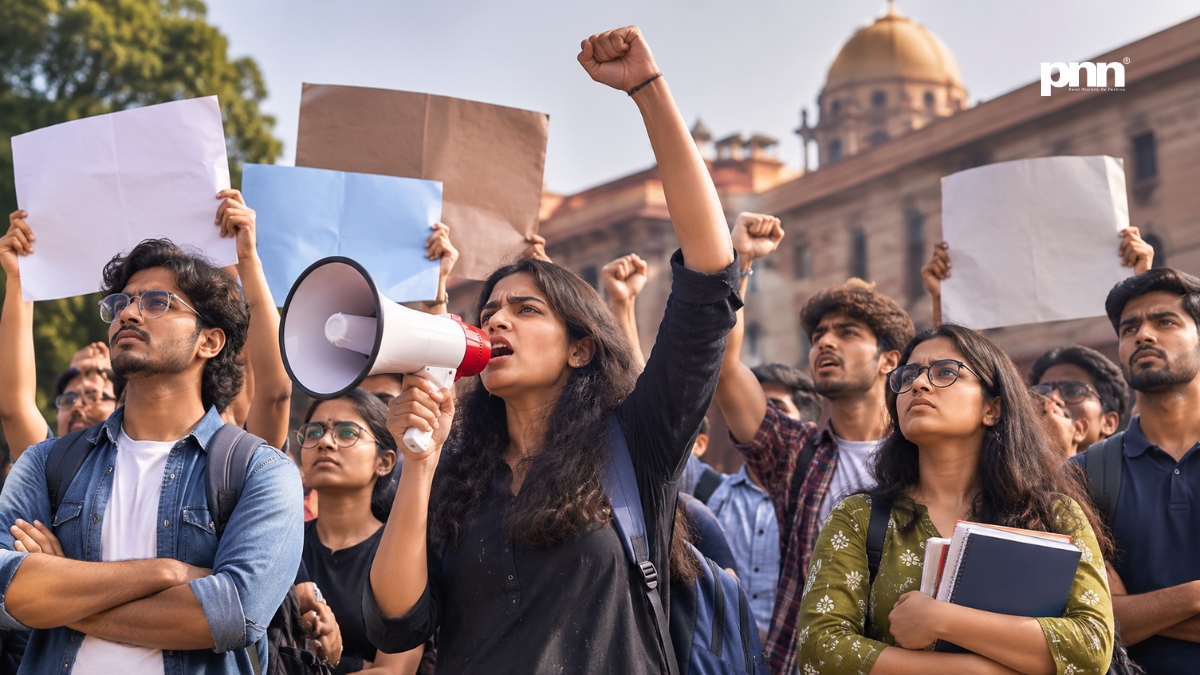
Mumbai (Maharashtra) [India], July 24: For over a month, Jantar Mantar in the heart of Delhi has stopped looking like a tourist spot and started to feel more like a restless campsite. Blue tarps dangle between weathered stone structures. Parents and kids curl up on mats and cardboard. Handwritten placards pile against the railings. Everywhere you look, students are waiting, frustrated, and exhausted by the way India handles its exams.
They aren’t here for small reforms. They want Union Education Minister Dharmendra Pradhan to resign. But honestly, unless you’ve been glued to the story, it’s easy to miss how a single exam disaster exploded into what many call the largest student-led protest that Modi’s government has faced in years.
It all started with NEET—the National Eligibility cum Entrance Test. Each year, more than two million students push through it, hoping for a precious slot at a medical school. This time, on May 3, the usual ritual played out: students hunched over their forms, OMR sheets everywhere. But then, ten days later, India’s National Testing Agency threw out the whole thing. Leaked questions, shared through Telegram channels, had surfaced before exam day—especially in Rajasthan.
Paper leaks aren’t rare here. Everyone remembers police recruitment, teacher eligibility, and even previous NEET exams getting hit. In the past, another retest might’ve just felt like more government bungling. But this time was different. In the endless days between the cancellation and the new exam date, news outlets started reporting student suicides—at least eleven tied to the fallout. Young people who’d spent months, sometimes years, preparing, saw their hard work erased. For them, the silence from the authorities was humiliating, almost cruel.
Talk to the crowds at Jantar Mantar, and you hear the same thing: this isn’t about one bad year or one broken test. These students have built their entire teenage years around high-stakes exams, only for a data breach to sweep it all away overnight—while the folks in charge shrug and carry on.
Oddly enough, a joke lit the fuse. The Cockroach Janta Party, a silly-sounding online satire movement launched by a young communications strategist, was never supposed to be serious. But as the NEET scandal grew, the CJP name suddenly turned into a rallying point, gathering both internet-savvy students and more traditional groups like the Students Federation of India and the All India Students Association.
Instead of coming for a single protest march and heading home, hundreds began camping at Jantar Mantar. Eighteen-year-old Anshuka Ruth Das, from Gurugram, hid her protest sign in a brown paper bag and joined the July march toward Parliament. She wasn’t even a NEET student herself. She came for all the students who’d lost hope—and life—over an exam. Lots of others joined for similar reasons: not anger about this specific test, but the feeling that the system forces everyone to stake their future on roll-of-the-dice exams.
The movement got a boost in late June when Sonam Wangchuk, a well-known activist and previous protester from Ladakh, started an indefinite hunger strike in support. His presence drew in older crowds and made it clear this wasn’t just a flash mob of upset teenagers.
Things boiled over on July 20. Tens of thousands of protesters tried to march toward Parliament. The police fired tear gas. They swung batons. Reports claimed over a hundred people were injured. One eighteen-year-old told reporters that after all that, students felt treated like criminals, not citizens with a reasonable complaint. The crackdown backfired, spreading protests from Delhi to Mumbai and even to the area around the Prime Minister’s house.
Meanwhile, Education Minister Pradhan didn’t budge. He’s stuck to his post and argued publicly that opposition parties are using students as political pawns. He pointed out that the June 21 re-test went off under heavy security and biometric screening, so, in his view, the system “worked.” Authorities even briefly blocked Telegram in June, insisting it was central to the leaks.
If this sounds familiar, that’s because it is. In 2016, mass protests after scholar Rohith Vemula’s suicide led to calls for two ministers to resign. Nobody did. One just got a different job. Critics keep bringing this up, saying that’s why they don’t think Pradhan will step down, no matter how loud the protests get.
Underneath the jokes, the chants, and all the banners, what’s really on trial here is an exam system where a single test can decide a young person’s entire future. Trying to fix that problem—one that touches millions every year—takes more than a minister leaving office. But for the students camped at Jantar Mantar, Pradhan’s resignation has turned into a symbol: is the government actually listening, or is this just another crisis to outwait?
No one knows yet if these protests will topple a minister or turn into the next episode in a long tradition of forgotten outrage. That answer is still up in the air.
