

 0
0
 0
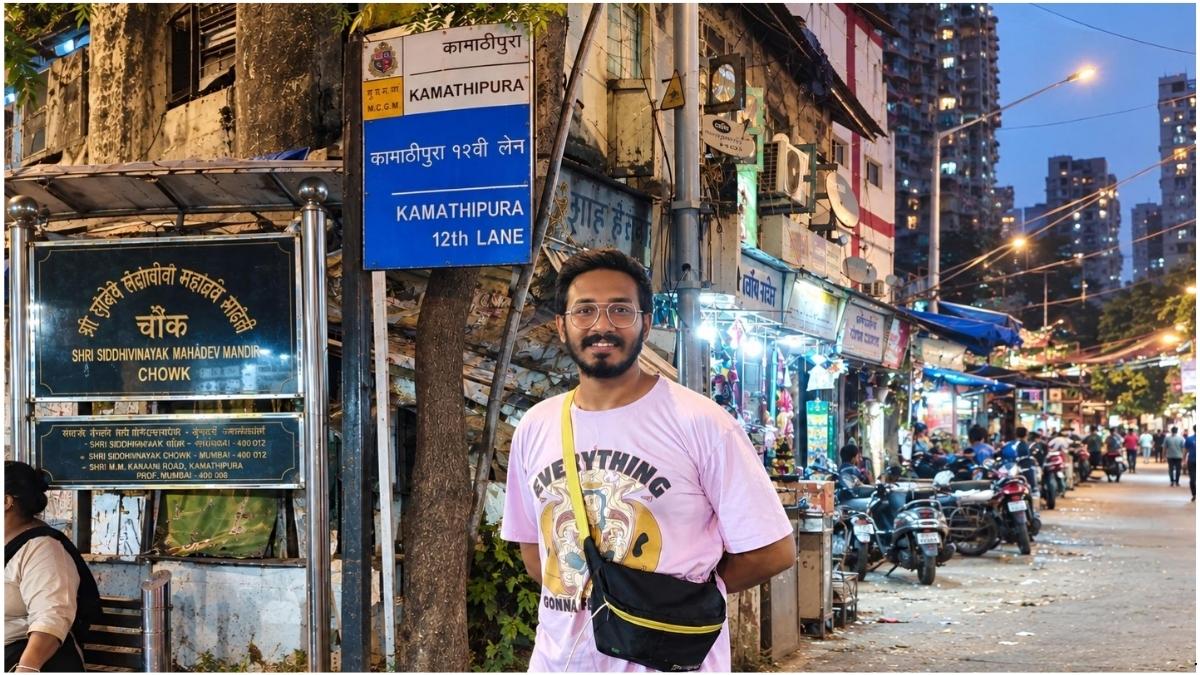
0 New Delhi [India], September 14: Mumbai has many neighbourhoods that are recognised instantly by name, but few carry as many layers of history, contradiction and social complexity as Kamathipura. Known widely as the city’s historic red-light district, the area has also been shaped by migration, communities, commerce, culture and decades of social change. Filmmaker Dhaval Pitale is now turning his camera towards this complex history through his upcoming documentary, Kamathipura urf KP (Mumbai 8).
For the 31-year-old filmmaker, the project is an attempt to look beyond the familiar identity associated with Kamathipura and explore the forces that have shaped the neighbourhood and continue to influence its future.
Born and brought up in a small chawl in Girgaon, Dhaval grew up fascinated by photography, frames and films. As a child, he was mesmerised by the camera and imagined himself making films, although he did not initially know how to enter the profession. His filmmaking education eventually gave that childhood fascination direction.
After completing a diploma in filmmaking from L. S. Raheja Technical Institute, Dhaval pursued BAFTNMP (Bachelor of Arts, Film, Television and New Media Production) from KC College, Mumbai. It was during this phase that he met his mentor Amol Jadhav, then the HOD of the course, who played an important role in shaping his understanding of cinema.
The experience changed the way Dhaval looked at his surroundings. Everyday life became a collection of frames, while ordinary places began carrying stories that he wanted to capture.
His professional journey reflects a steady evolution as a filmmaker. From starting out as an Assistant Director, he grew into roles as an Associate Director and Director, eventually moving towards becoming a full-package filmmaker who can take a project from its initial idea through writing, direction and visual execution. The journey has taken him across projects associated with Star Plus, Star Pravah, Zee5, Disney+ Hotstar, Jio Studios and other production houses, giving him an understanding of filmmaking across different stages of production.
The disruption caused by the pandemic eventually led him towards independent filmmaking. As field projects became less frequent, Dhaval established his own production house, Aadhya Films, and began developing short films, scripts, documentaries and content creation projects with renowned social media content creators.
His short film Niras Chakr – A Monotonous Life received recognition at local film festivals. He later made his self-funded 50-minute debut feature film, iKHlaas, which was released across platforms including Amazon in the UK, US and Japan, MX Player, Tata Binge and Hungama.
With Kamathipura urf KP (Mumbai 8), however, his focus moves towards documentary filmmaking and the preservation of a complicated urban history.
The film seeks to examine Kamathipura through the intertwined histories of colonialism and capitalism, while addressing difficult subjects including trafficking, violence, crime and sex work. At the same time, Dhaval wants to explore how the identity of the neighbourhood is changing as Mumbai continues to modernise.
The documentary is being made with Dhaval’s Associate Director, Priyanshi Rathor, who is also part of Aadhya Films. The two have developed a creative partnership that extends beyond filmmaking. Priyanshi works with Dhaval on their AI research and development, exploring how emerging technologies can be incorporated into visual storytelling without losing the essence of the story being told. The duo have also collaborated on an AI-generated music video, further exploring the intersection of filmmaking and new technology.
Their approach to Kamathipura urf KP (Mumbai 8) is deliberately rooted in reality. Dhaval describes his filmmaking style as being drawn towards rawness and guerrilla-style shooting, allowing real locations and environments to become part of the visual language.
The documentary is also part of his growing experimentation with technology. After being introduced to artificial intelligence, Dhaval began learning different AI tools and exploring how they could be incorporated into filmmaking. He currently works as a GenAI Video Creator at Pocket FM, creating advertisements and promotional content.
He has also experimented with AI in his independent work, including creating a music video with Priyanshi Rathor. For Kamathipura urf KP (Mumbai 8), he is exploring AI-assisted visualisation to help audiences understand how parts of the area may have looked in the past.
The intention is not to replace documentary reality, but to help audiences visualise histories that can no longer be easily seen.
For Dhaval, this approach reflects the changing nature of filmmaking itself. Technology may evolve, but the need to observe, document and tell stories remains.
Alongside Kamathipura urf KP (Mumbai 8), Dhaval is also associated with another documentary project, Girgaon – 4 ‘The Cultural Heritage?, which examines the history and changing identity of Girgaon. Importantly, this documentary is being made with his mentor Amol Jadhav, with Dhaval working as an Associate Director on the project. The collaboration brings together the mentor who helped shape Dhaval’s understanding of cinema and the filmmaker he has since become.
The two projects look at different parts of the city, but share a common concern: what happens to the stories, spaces and identities of neighbourhoods as Mumbai changes?
For Dhaval, filmmaking is a way of recording those transitions.
His long-term ambition is to establish himself as a filmmaker known for his writing, direction and distinctive way of capturing frames. He hopes his documentary projects can eventually represent India at academic and international platforms.
With Kamathipura urf KP (Mumbai 8), his camera turns towards a part of Mumbai that has often been defined by a single label. By exploring the history behind that label and the changes taking place around it, Dhaval hopes to create a record that can be understood not only by today’s audiences, but also by future researchers, sociologists and historians.
For a filmmaker who grew up seeing Mumbai through the rawness of everyday life, the project is another attempt to capture the city as it really is — complicated, constantly changing and full of stories hiding in plain sight.
If you object to the content of this press release, please notify us at pr.error.rectification@gmail.com. We will respond and rectify the situation within 24 hours.


Average Rating