

 0
0
 0
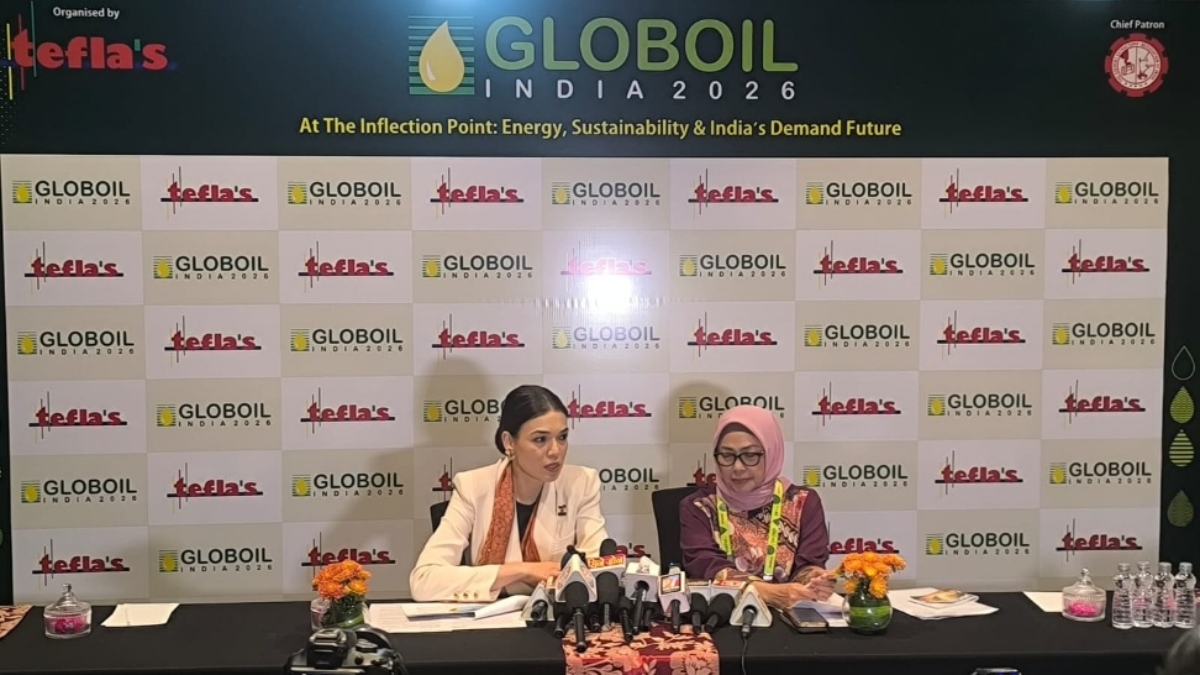
0 CPOPC Secretary-General, Izzana Salleh, on the Left with CPOPC Deputy Secretary-General, Dr. Musdhalifah Machmud, addressing the press during Globoil India 2026 in Mumbai
New Delhi [India], October 6: The Council of Palm Oil Producing Countries (CPOPC) reaffirmed its commitment to strengthening cooperation with India on edible oil security, sustainable palm oil production, resilient supply chains and consumer awareness during GLOBOIL India 2026, held in Mumbai from September 29 to October 1, 2026.
During the conference, CPOPC Secretary-General Izzana Salleh highlighted India’s strategic importance to palm oil-producing countries, emphasising the need for a collaborative approach to ensuring reliable edible oil supplies, supporting farmers and promoting sustainable growth.
“India is much more than an export destination for palm oil-producing countries. It is a partner in our shared pursuit of food security, resilient supply chains, productive farmers and sustainable growth,” said Izzana Salleh.
CPOPC welcomed India’s initiatives to strengthen domestic edible oil production, noting that enhanced domestic capacity and dependable international supplies can complement each other in meeting the country’s growing demand. The Council identified oil palm agronomy, improved planting materials, smallholder productivity, traceability and sustainable sourcing as key areas for deeper cooperation between producing countries and Indian stakeholders.
Addressing the palm oil session at GLOBOIL India 2026, CPOPC Deputy Secretary-General Dr. Musdhalifah Machmud highlighted the evolving dynamics of global edible oil markets, particularly the growing demand for biofuels in producing countries and its implications for international trade.
“Food and energy security are both legitimate objectives. As national biofuel policies evolve, transparency and dialogue will help producers and Indian buyers plan ahead. Improving productivity, particularly among smallholders, is also essential to strengthening long-term supply,” she said.
CPOPC noted that combined palm oil production across its member countries increased from approximately 66 million tonnes in 2021 to 73 million tonnes in 2025. However, sustaining future production growth will require greater investment in replanting, improved agricultural practices, technological advancement and farmer support, alongside responsible management of domestic and export demand.
Strengthening Consumer Awareness and Stakeholder Engagement
As part of its engagement in India, CPOPC, in collaboration with the Asian Palm Oil Alliance (APOA), the Solvent Extractors’ Association of India (SEA) and Solidaridad Asia, convened a stakeholder roundtable on October 1, 2026, titled “Understanding Palm Oil Perceptions and Consumer Narratives in India.”
The roundtable brought together perspectives on nutrition, sustainability, responsible sourcing and food marketing, with discussions focusing on how Indian consumers perceive palm oil and interpret claims such as “Palm Oil-Free”. The dialogue also explored opportunities to improve consumer understanding through transparent, credible and evidence-based information.
The initiative was designed as a listening and discussion forum, providing stakeholders an opportunity to exchange views, understand consumer concerns and explore potential areas for continued engagement.
“Our relationship with India cannot be built only around tonnes and prices. It also requires listening to Indian stakeholders, understanding consumer concerns and working together on credible information,” Izzana Salleh added.
CPOPC’s participation at GLOBOIL India 2026 builds on its cooperation with APOA and Solidaridad Asia, established in Mumbai in 2025. The Council reiterated that sustained engagement between palm oil-producing countries, Indian industry, policymakers and other stakeholders will be important in addressing evolving market dynamics, strengthening supply chain resilience and supporting the interests of farmers, businesses and consumers.
Through its participation in GLOBOIL India 2026 and the associated stakeholder discussions, CPOPC reaffirmed its commitment to constructive India–producer country partnerships, with a focus on predictable trade, sustainable production, agricultural productivity and informed consumer dialogue.
About CPOPC
The Council of Palm Oil Producing Countries (CPOPC) is an intergovernmental organisation that facilitates cooperation among palm oil-producing countries and promotes dialogue with consuming markets. Its member countries are Indonesia, Malaysia, Honduras, Papua New Guinea, the Democratic Republic of the Congo and Nigeria. Colombia, Ghana and Costa Rica are Observer Countries. Together, CPOPC member countries account for approximately 90% of global palm oil production.
For the latest updates, visit www.cpopc.net and follow us on X (Twitter) @CPOPC_NET | Instagram @cpopc_net | Facebook @cpopc_net | YouTube & LinkedIn @Council of Palm Oil Producing Countries


Average Rating