

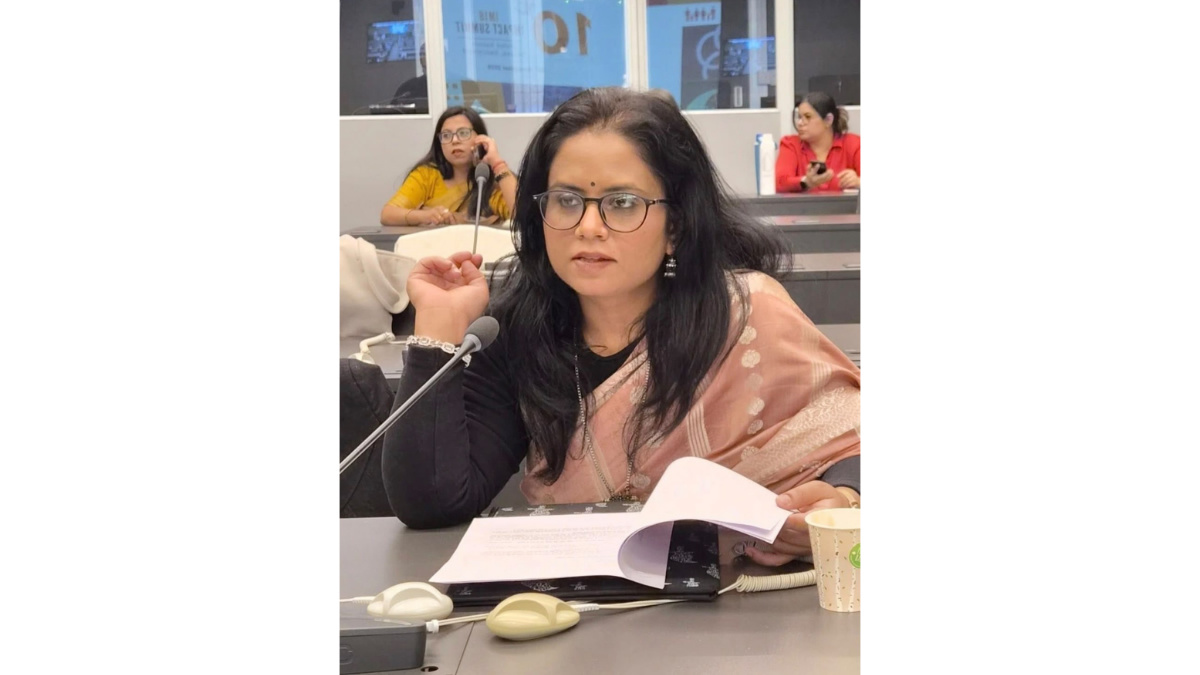
Represented India at the 10th 1M1B Impact Summit in Geneva, highlighting tribal traditions and traditional knowledge systems as the foundation of environmental protection.
New Delhi [India], November 23:Dr. Priyanka Singh, Assistant Professor in the Department of Indian Languages and Literature at Gautam Buddha University, represented India and the university at the 10th 1M1B Impact Summit held at the United Nations Office in Geneva, Switzerland. She presented the importance of environmental conservation and ecological sustainability through the Hindi language, literature, Indian cultural heritage, and traditional knowledge systems on the global platform.
The summit was organised by the One Million for One Billion (1M1B) Foundation on November 21 at the Palais des Nations. As part of the event, a special session titled ‘Earth, Language and Heritage’ was organised, during which Dr. Priyanka Singh highlighted the deep-rooted awareness of nature conservation and human-nature coexistence embedded in Indian languages, literature, and cultural traditions.
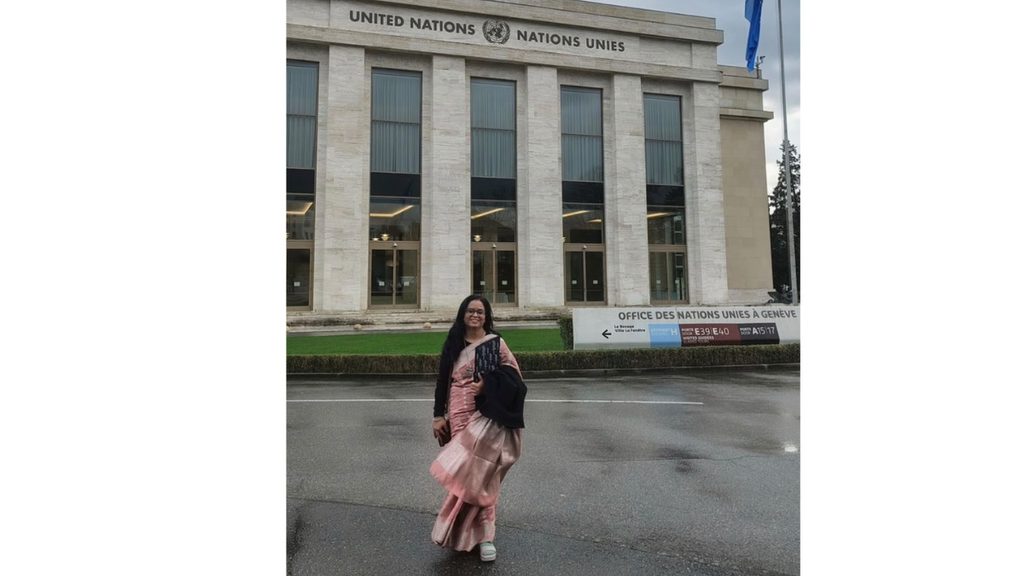
Presenting the Indian perspective on nature through Hindi literature, Dr. Singh explained that the environment is not merely a collection of physical resources but a life-giving force that deserves to be respected like a mother. She emphasised that the relationship between humans and nature should not be based on dominance but on mutual dependence and coexistence.
Referring to the literary contributions of Sumitranandan Pant, Jaishankar Prasad, Mahadevi Verma, and Jasinta Kerketta, Dr. Singh explained that nature in Hindi literature is not limited to descriptions of beauty. Instead, it is deeply connected with human emotions, spirituality, and introspection.
She also cited Indian festivals such as Bihu, Basant Panchami, Onam, and Lohri to demonstrate how Indian cultural traditions are closely associated with agricultural cycles and nature. She explained that cultural and religious beliefs surrounding trees such as Peepal, Banyan, and Tulsi, as well as rivers and animals, have helped establish a social framework for their protection and conservation.
During her presentation, Dr. Singh also highlighted the traditional knowledge systems of tribal communities and the deep connection between nature and Australia’s Aboriginal communities. Citing the Mahua tree and the Chipko Movement, she conveyed the message that humans should take only as much from nature as it can sustainably provide.
Referring to the Middle Path of Buddhist philosophy, Dr. Singh emphasised the importance of maintaining ecological balance. She stated that trees, rivers, soil, rainfall, animals, birds, and human beings are all interconnected and dependent on one another. Any disturbance in the balance of one component can affect the entire ecosystem.
She further explained the need to maintain a balance between material needs and the aesthetic and emotional dimensions of life through Ramvriksh Benipuri’s literary work Gehun Aur Gulab. She also highlighted the importance of simple everyday actions such as conserving water and electricity, reducing plastic consumption, using public transport, cycling, and planting trees as meaningful contributions towards environmental protection.
Dr. Priyanka Singh placed special emphasis on the role of students and young people in environmental conservation. She stressed that schools and universities should promote environmental awareness, environmental literacy, and activities related to the Sustainable Development Goals (SDGs) to develop environmental consciousness from an early age.
Expressing her gratitude for the opportunity to participate in the international summit, Dr. Singh acknowledged the support of Gautam Buddha University’s Vice-Chancellor, Prof. Rana Pratap Singh; Registrar, Prof. Chander Kumar Singh; Dean of Academic Affairs, Prof. Rajiv Varshney; and Dean of Research and Planning, Prof. Dhanalakshmi.
Meanwhile, Prof. Madhav Govind, Dean of the School of Humanities and Social Sciences; Dr. K.K. Dwivedi, Dean of the Law School; and Dr. Satish Chandra, Head of the Department, extended their best wishes to her for her participation and achievement.
The summit in Geneva brought together young changemakers, academicians, and thought leaders from different countries to deliberate on important global issues, including climate diplomacy, technology, inclusive development, and sustainability.
Dr. Priyanka Singh’s participation provided an important opportunity to connect Indian Hindi literature, cultural heritage, and traditional knowledge systems with the global discourse on environmental conservation, highlighting the relevance of India’s rich cultural and literary traditions in addressing contemporary ecological challenges.
If you object to the content of this press release, please notify us at pr.error.rectification@gmail.com. We will respond and rectify the situation within 24 hours.
