

 0
0
 0
0 Three-day conference at IBM Learning Center features 22 technical sessions, six keynote lectures and two specialised workshops
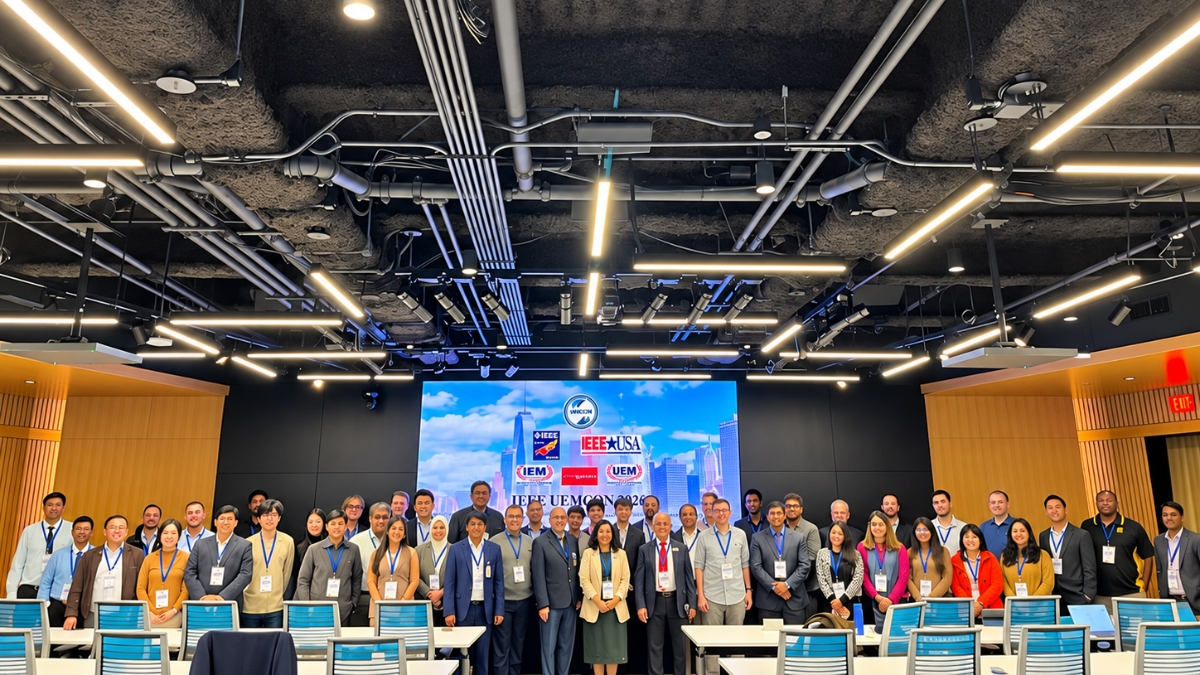
New York [New York], October 9: For students and faculty from India’s engineering and technology institutions, access to global research networks often remains as important as classroom learning. Seeking to bridge that gap, the Institute of Engineering & Management (IEM) and the University of Engineering & Management (UEM) Group have brought researchers, academicians and industry experts from across the world together at IEEE UEMCON 2026, being held at the IBM Learning Center in New York.
The three-day international conference, which began on October 7 and will continue till October 9, has brought together leading scientists, researchers, academicians, industry professionals and technology experts to discuss developments across a range of emerging technology domains.
The conference has been organised through the collaborative efforts of the IEM and UEM Group, with institutions in Kolkata and Jaipur. A key focus of the initiative is to strengthen the link between Indian higher education and international research institutions and technology industries.
The conference provides students and faculty members an opportunity to interact directly with internationally recognised scientists, university professors and industry experts, with the larger objective of creating opportunities for research, innovation, professional development and international academic collaboration.
The choice of the IBM Learning Center in New York as the venue has added an international dimension to the programme, with discussions centred on emerging areas including Artificial Intelligence (AI), Machine Learning, Cybersecurity, Electronics, Wireless Communication, Cloud Computing, Big Data, the Internet of Things (IoT) and other interdisciplinary technology domains.
For the IEM–UEM academic community, the conference is also being positioned as a platform to move beyond conventional classroom exposure. Students and faculty members get an opportunity to present research and innovations before international experts, understand global research practices and build academic networks that could lead to collaborative projects, joint publications, mentorship and advanced research opportunities.
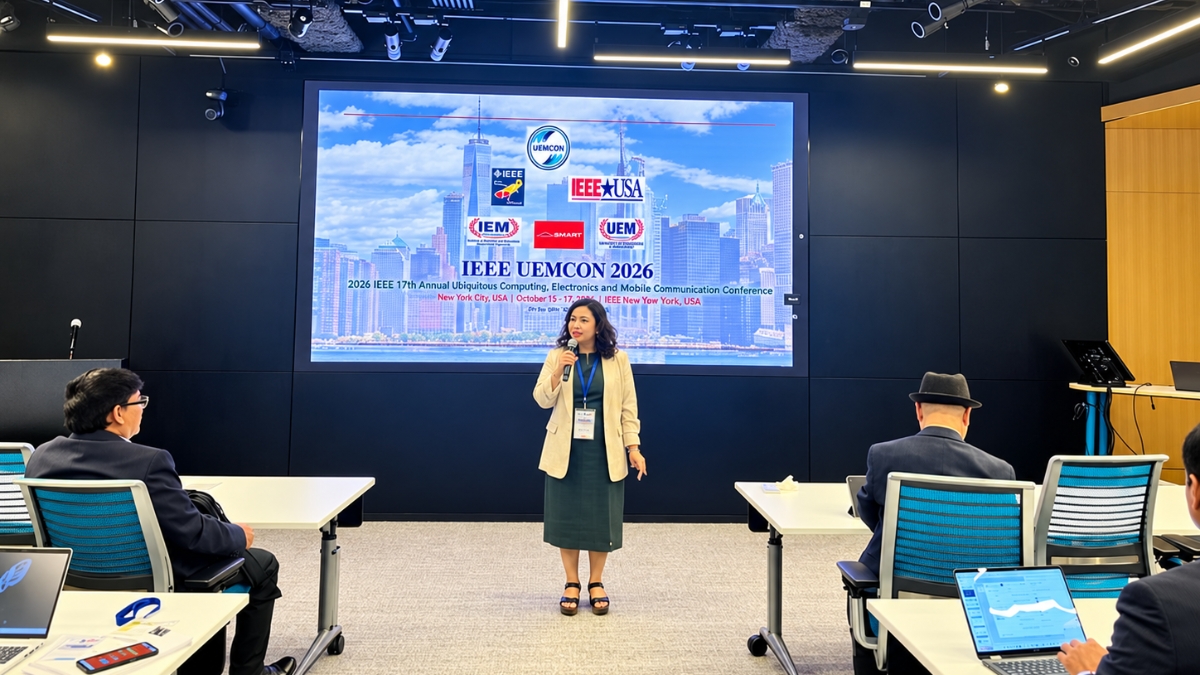
The inaugural session began with a welcome address by Prof. (Dr.) Rajashree Paul, who stressed the importance of international collaboration, interdisciplinary research and technological innovation in addressing global challenges.
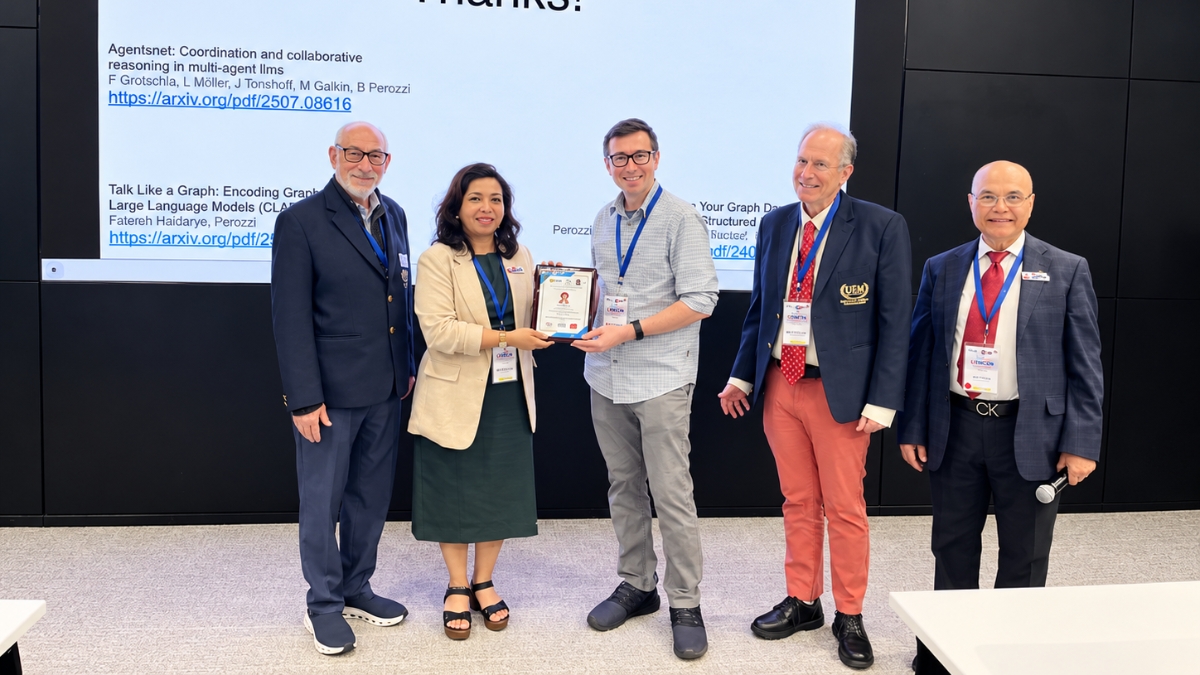
She highlighted the need for stronger academic partnerships across countries and disciplines and underlined the role international conferences can play in facilitating meaningful knowledge exchange and collaborative innovation.
The inaugural programme saw participation from several members of the international academic community, including Dr. Charles Rubenstein, Finance Chair, Pratt Institute; Prof. (Dr.) Phillip Bradford, University of Connecticut; and Prof. (Dr.) Son Vuong, University of British Columbia.
Their participation reflected the international academic profile of IEEE UEMCON 2026 and its focus on connecting researchers and institutions across geographical and disciplinary boundaries.
Prof. (Dr.) Satyajit Chakrabarti, Vice Chancellor of the University of Engineering & Management (UEM), Kolkata, also addressed the gathering and spoke about the importance of taking international research opportunities directly to Indian students and faculty members.
According to Chakrabarti, the objective of IEM and UEM goes beyond classroom education. He emphasised the need to create an academic ecosystem where students and teachers can actively participate in international research, innovation and technological development.
He pointed to the rapid changes taking place in technology, particularly with the emergence of Artificial Intelligence, and said universities need to move beyond traditional teaching approaches. Students, he said, need opportunities to work on real-world problems, develop innovative solutions and collaborate with researchers from across the world.
Chakrabarti also highlighted the role of international conferences organised by the IEM–UEM Group in connecting Indian students and faculty members with the global research community.
Such platforms, he said, can help young researchers gain international exposure, identify emerging research areas, build professional networks and explore collaborations with universities, research laboratories and technology companies.
One of the key academic features of IEEE UEMCON 2026 is its selective research paper acceptance rate of 36.7%, reflecting the peer-review process followed by the conference.
For faculty members and students from IEM and UEM, participation in such a conference also provides an opportunity to understand international research standards and engage with scholarly work that has gone through a rigorous review process.
The conference has 22 technical and parallel sessions, covering areas ranging from Artificial Intelligence and its Applications, IoT and AI and Big Data to Advanced Mobile Communication, AI and Cybersecurity, AI and Cloud Computing, Cybersecurity and Blockchain, AI and Consumer Electronics, AI and Wireless Technologies, Human–Computer Interaction, Consumer Electronics and Advanced Communication Systems.
The sessions provide researchers with opportunities to present original work, exchange ideas, receive feedback from international experts and explore potential areas of future collaboration.
For the IEM–UEM academic community, the technical programme is also expected to help identify emerging research themes that can feed into undergraduate and postgraduate projects, doctoral research, faculty development programmes, research laboratories and innovation initiatives.
The keynote programme is another major feature of IEEE UEMCON 2026. The conference has six keynote lectures, with three delivered by leading academic researchers and three by industry experts.
The combination of academic and industry participation is intended to bring research and practical technology applications closer together. The keynote sessions cover emerging technological trends, advanced research methodologies, industrial research challenges and the skills needed to participate in the global innovation ecosystem.
A major highlight of the inaugural programme was a lecture by Léon Bottou, Research Scientist at the Flatiron Institute, titled “The Fiction Machine.”
The lecture offered perspectives on contemporary developments in Artificial Intelligence, Machine Learning and Computational Research.
For young researchers and students attending the conference, participation by internationally recognised researchers such as Bottou provides exposure to advanced scientific thinking and offers an opportunity to understand some of the directions in which AI research is evolving.
The conference also includes two specialised workshops aimed at providing participants with practical insights into emerging technologies.
The first workshop, “How IBM Bob and AI Tools Are Changing the Way Solutions Are Built,” will be conducted by Dr. Sanjeev Kumar Marimekala, STSM Thought Leader, Enterprise Architect, Open Group Certified Distinguished Architect and Region 1 AI Coalition Board Member.
The workshop will examine how contemporary AI tools and platforms are changing the way technological solutions are designed, developed and implemented. It will also focus on the application of AI in real-world engineering and enterprise environments.
The second workshop, “Aspects of Virtual Reality,” will be conducted by Dr. Phillip Bradford of the University of Connecticut, Stamford, USA.
The session will introduce participants to developments in Virtual Reality and its applications across engineering, education, research and other sectors.
For the IEM–UEM Group, the workshops are aligned with its broader emphasis on project-based learning, applied research, innovation and industry-oriented education.
A key objective of the IEM–UEM initiative is to ensure that international exposure translates into tangible academic opportunities for students and faculty members in India.
The conference provides a platform for identifying potential research collaborators, exploring joint projects, encouraging international publications and developing expertise in emerging technology areas.
Faculty members can benefit from interactions with international researchers through the exchange of research methodologies, identification of new research problems and exploration of collaborative academic initiatives.
For students, the exposure extends to international research practices, emerging technologies and possible pathways towards advanced studies, innovation and research careers.
The conference also forms part of the broader effort by IEM and UEM to build a research-driven educational ecosystem in which students are encouraged to move beyond examinations and textbooks towards experimentation, innovation, entrepreneurship and the development of practical solutions to real-world problems.
By hosting international academic events and bringing together experts from global universities and technology organisations, the IEM–UEM Group aims to strengthen the links between its campuses in Kolkata and Jaipur and the international research community.
IEEE UEMCON 2026 will continue through October 9 with technical paper presentations, keynote lectures, invited talks, specialised workshops and scholarly interactions.
Researchers, faculty members, students and technology professionals participating in the conference will have opportunities to exchange knowledge, build professional relationships and explore new directions in scientific and technological research.
The conference will conclude on October 9 with further academic sessions and a valedictory programme highlighting key research contributions and technological insights emerging from the three-day event.
IEEE UEMCON 2026 marks another step in the IEM–UEM Group’s efforts to internationalise research and higher education while creating opportunities for Indian students and faculty members to engage with the global academic community.
With the IBM Learning Center, New York as its venue, a 36.7% research paper acceptance rate, 22 technical sessions, six keynote lectures and two specialised workshops, along with participation from researchers representing academia and industry, the conference brings together multiple strands of global research, technology and higher education.
For IEM and UEM, the larger objective remains to connect students and faculty members from Kolkata and Jaipur with international researchers, expose them to global scientific discussions and encourage them to contribute to technologies and research areas that are expected to shape the future.
If you object to the content of this press release, please notify us at pr.error.rectification@gmail.com. We will respond and rectify the situation within 24 hours.


Average Rating